


Is Your Safety Incentive Program Budget Going Up In Smoke?

Companies spend millions on safety incentives each month but most programs are ineffective at maintaining low-incident rates because emphasis is placed on the goal and not the behavior.

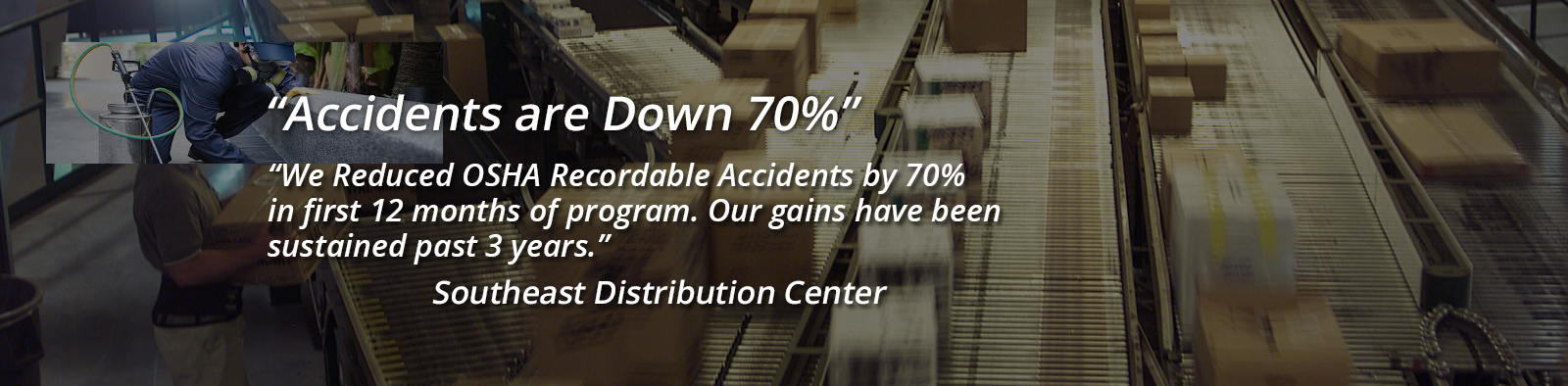
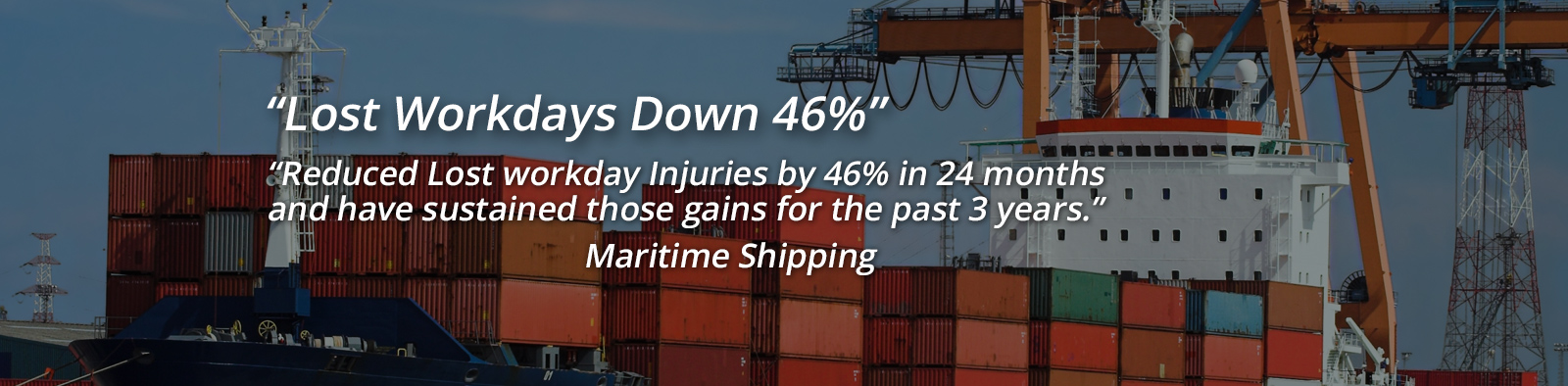
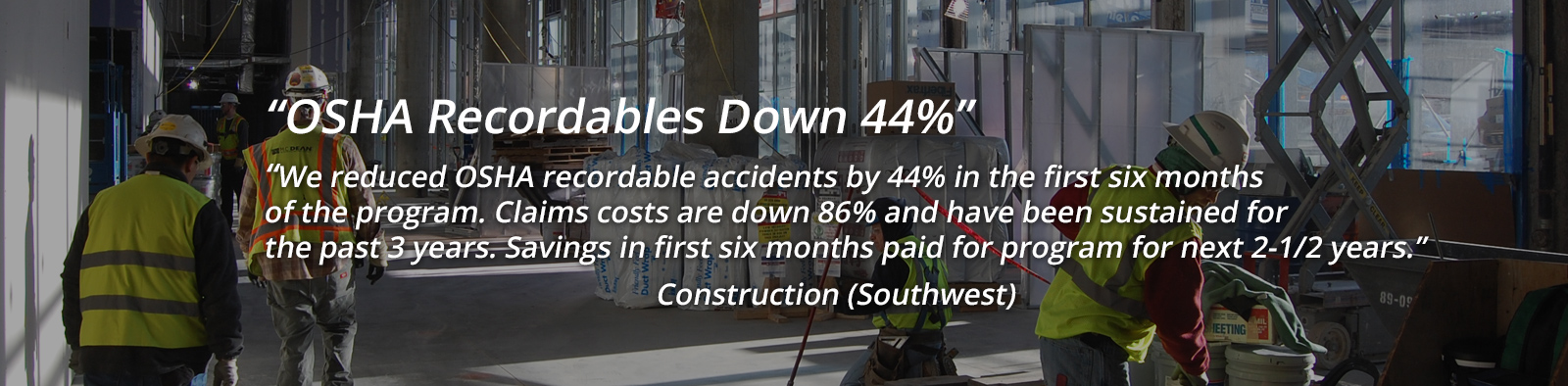
Our safety programs combine 40 years of incentive program success with behavior-based safety best practices. The results are long-term reduction in accidents and increased morale.


Tax Free Scratchoff Program

starperks safety scratchoffs

Safety Scratch Off Program

Easy-to-implement program where you distribute scratch off cards worth points toward trips and prizes. Learn More

Genesis Online Loyalty Points Program

genesis online safety points

Custom Online Points Program

Customize your own points program and give employees the ability to redeem points online. Add it as an overlay to any BBS or safety program. Learn More.

Smartcard Behavior Based Safety System

safety bbs teaser

Complete BBS System

A complete behavior based recognition program that includes both online and offline tools. Learn More.

Zero Injuries Is Not Your Goal

Accidents are simply another kind of defect -- a deviation from the standard of perfection. And, like quality, these defects must be detected and eliminated at the moment they first appear. It was 1981, and I was in Danville, Va. I followed Tom, the safety director, through a dark, old textile mill, walking on heart-of-pine floors that probably had seen workers come and go for more than a hundred years. The smell of machine oil mixed with the warm smell of cotton. The textile machines hummed away, spinning out yard after yard of fabric. I watched the workers busily monitoring the machines to keep them running at peak efficiency and noted many of them had T-shirts emblazoned with a slogan: Zero Injuries -- Our Goal. On the walls in every breakroom, the same "Zero Injuries" slogan was repeated on posters, coffee mugs, you name it. I was impressed by the passion in this culture to reach zero injuries, so I asked Tom about his plant's safety record. "Well, Bill, I'll be honest. We've made huge gains in safety over the last five years, but now it seems that reaching zero is impossible," he admitted. "The closer we get to zero, the harder it becomes to show improvement. We've started to plateau or 'flat line,' and my concern is that we'll do a 'hockey stick' and trend back up." With some 1,500 employees, Tom's plant routinely celebrated million-hour milestones, fed people steak dinners, and the like. But it still had a steady stream of injuries that wouldn't go away. Tom's problem was like that of many other cultures: They have chased the goal of Zero Injuries year after year, only to find it to be more elusive than the pot of gold at the end of the rainbow. Click here to find out more! At that moment, I looked Tom dead in the eye and told him part of his problem was that he was chasing the wrong goal. I told Tom what I've told thousands of safety leaders around the world for more than 30 years: Zero injuries is not your goal. "Huh? What did you say, Bill?" If you're thinking this, it's completely normal. Usually I get a degree of "shock and awe" when I say this to audiences. They're not quite sure I'm in my right mind. But I am completely serious. Zero injuries should not be your goal. Until leaders understand that there is a level of safety beyond zero, they will be stuck on the dreaded "hockey stick plateau" in their safety performance. Why is it that chasing Zero Injuries eventually produces this plateau? To get at this answer, we need to look into the world of quality improvement. In particular, I want to consider the work of Dr. W. Edwards Deming, Statistical Process Control and general-all-around-quality guru. For those of you who don't know who Deming was, I'll give you the short version. After World War II, Dr. Deming approached the U.S. automakers and told them if they would listen to his somewhat radical theories on quality improvement, they could revolutionize quality, make vehicles that would last longer, and build more loyal customers. There was just one problem with Deming's idea: The big three automakers actually were delighted when something went wrong with a car, as long as it was out of warranty. If enough things failed on a car, then the customer would bring it to the dealership and trade it for a new one. This strategy even had a name: "planned obsolescence." Planned obsolescence is why, as a little boy just 6 years old, I remember admiring the beautiful chrome "Cadillac" emblem inside my dad's 1969 Cadillac Sedan DeVille. About two years after Dad bought his new Caddy, right on schedule, those emblems would fall off. This "defect" provided a pretty big NIC for my Dad (a negative, immediate, and certain consequence). I'm not sure what else went wrong on Dad's car, but soon enough, he headed for the dealership to swap for a new car (a very big PIC for both him and me!). "Planned obsolescence" had sold another car. Strange as it may seem, this strategy of building poor quality into a product was a PFC (positive, future, certain) consequence for the major U.S. automakers in the fifties and sixties. As you might imagine, Deming's words of wisdom fell on deaf ears at the Big 3. That's why he went to Japan. Here, as is often the case, one man's NIC is another man's PIC. The Japanese (who were looking for ways to grab U.S. market share) listened to Deming and designed quality into their products, making them better, cheaper, and more fuel efficient than their U.S. competition. Needless to say, the Japanese taught U.S. manufacturers a vital lesson in quality versus planned obsolescence and about PICS versus NICS in product design and market share. How Quality Relates to Safety and Recognition In a nutshell, here’s how Deming gave the Japanese the winning hand in quality. When a factory produces a part that is defective and fails to meet specifications, then the part must be either scrapped or reworked. Or, worse yet, it ships to the customer, creating an unhappy customer who eventually stops buying the product. Any of these options is expensive and wasteful. Deming taught that quality should be measured at every step in the process. Rather than get the car fully assembled and counting defects at the end of the line, every step in the assembly process needed to have statistical analysis to see whether the process was in control or out of control. Hence the name "Statistical Process Control."

AMERICAN SOCIETY OF SAFETY ENGINEERS SOON TO LAUNCH CHAPTER IN INDIA

DES PLAINES, IL (January 9, 2012) – Realizing the importance of safety in the workplace, India’s growing community of occupational safety professionals today announce the planned launch of the India Chapter of American Society of Safety Engineers (ASSE) to occur in March, 2012. With close to 70 occupational safety, health and environmental (SH&E) professionals currently a part of the proposed new chapter in India, and many more expressing interest, ASSE’s India Chapter organizers expect the number of new members to grow quickly as news of its formation continues to spread. “The formation of the India Chapter advances our goal to increase awareness of safety around the world,” stated ASSE president Terrie S. Norris. “It allows us to engage more people in our efforts to reduce the loss of life and property, and sustain the environment. While tools, traditions and regulations may differ, our desire to promote and advance safety is the same in any language.” Intended as a way to bring together India’s growing population of SH&E professionals, and hundreds of students currently enrolled in the country’s SH&E university programs, ASSE’s India Chapter will provide members of the safety community with opportunities to network, share best practices, develop professional knowledge and skills and advance the profession while protecting people, property and the environment. “Affiliation and networking within ASSE, the oldest safety organization will be mutually beneficial for all of its members around the world,” explained Jitendra (Jitu) Patel, CPEA, emeritus member of ASSE, and recipient of the 2011 Society Fellow, the highest honor granted by ASSE, and one of the active leaders and founders of its India Chapter. Over the years the business market in India has been a destination for commercial endeavors and investments, and it has experienced high technological and economic growth. According to the Indian government, the country’s economy is expected to grow at approximately 7.5 to 8.5 percent in 2012. With this growth comes greater SH&E need in the country’s many expanding industries including; oil and gas, automobile manufacturing and maintenance, electricity, nuclear energy, construction, information technology, agriculture and traffic safety. Among India’s greatest occupational safety challenges is convincing corporate management about the value of a safe workplace, and that safety translates into profitability. “Management needs to introduce a greater culture of safety into business,” said Patel. “We must convince management of how valuable safety is and of its key role in their success.” The announcement of ASSE’s India Chapter further expands the Society’s mission to lead the charge of advancing the profession and enhancing safety around the world. Those in the SH&E profession who initially join ASSE’s India Chapter will also have the unique distinction of being a ‘Founding Member,’ assisting in the launch of this important organization.

Battery Cables

By Bill Sims Jr.

It was about 2:30 p.m. and I had just finished a speaking assignment for the Tarheel Safety Chapter in Charlotte, North Carolina. They are a lively group of safety professionals who asked me to come and speak about behavior change, which I did. While there I learned a lot about some changes coming down the pipeline from OSHA, from my new BFF, Bob, with OSHA (more on that later).

After the meeting, I packed up my computer and projector and put them in the trunk of my car, sliding into the front seat. As I’ve done a million times before, I put the key in the switch and turned it to the right, convinced in my mind that I was about to hear that good old V8 rumble to life, one of my top ten favorite PICs in life.

Read more...